

Knowledge base
Guides and answers
How to choose a coating, prepare the substrate, install it and look after it. Written from Teping® product instructions and the TNP technical solutions album.
- practical guides
- 10
- answers to common questions
- 41
- product families covered
- 5
Guides
From the choice to the first wash
Each guide follows one job step by step and links to the products and coating systems it mentions.
Topic
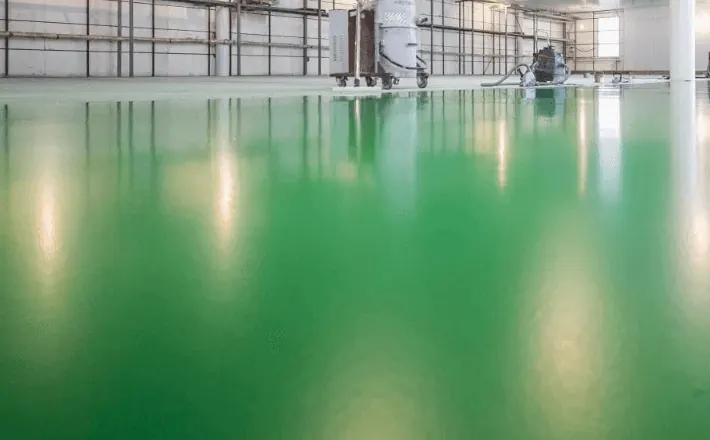 01
Epoxy, polyurethane, PU-cement or paint: choosing a floor coatingHow the four types of Teping® floor coatings differ in thickness, strength, elasticity and heat resistance, and where each one works best.
4 min readRead the guide
01
Epoxy, polyurethane, PU-cement or paint: choosing a floor coatingHow the four types of Teping® floor coatings differ in thickness, strength, elasticity and heat resistance, and where each one works best.
4 min readRead the guide 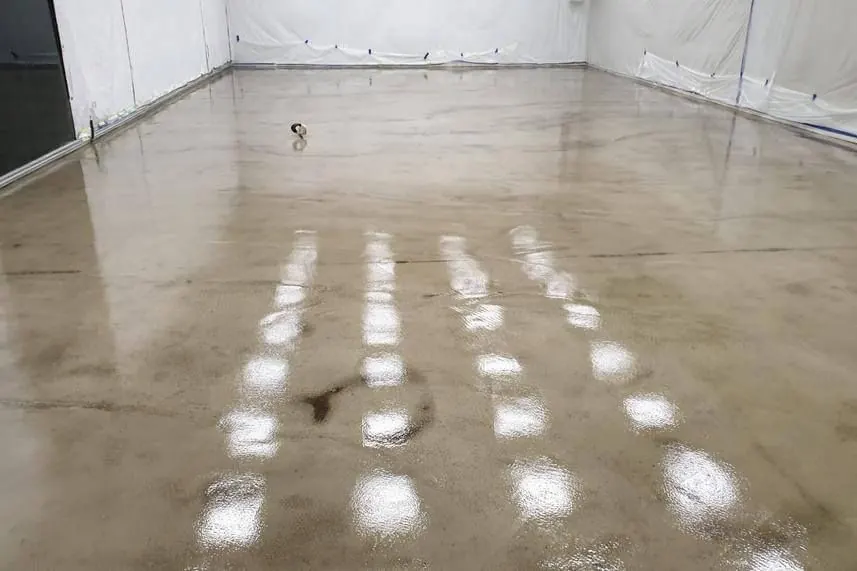 02
Preparing a concrete substrate for a resin coatingWhat the substrate must be, how to check it, and how to grind, repair and prime it so that the coating holds for years.
4 min readRead the guide
02
Preparing a concrete substrate for a resin coatingWhat the substrate must be, how to check it, and how to grind, repair and prime it so that the coating holds for years.
4 min readRead the guide 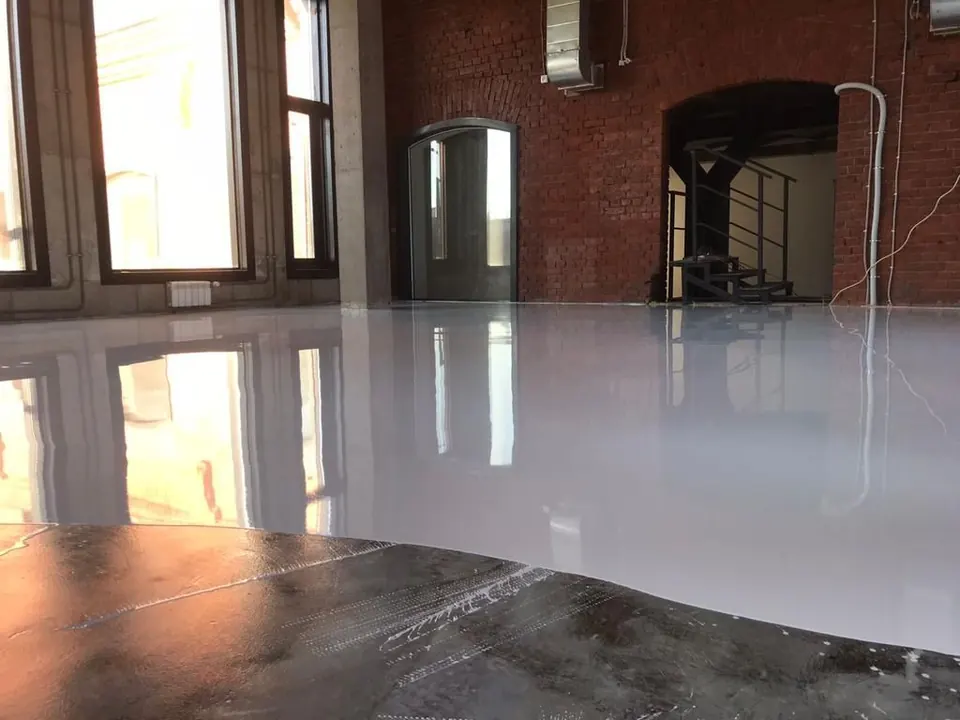 03
Installing a self-levelling floor step by stepTools, mixing, pouring, removing air and the waiting times for epoxy and polyurethane self-levelling floors.
4 min readRead the guide
03
Installing a self-levelling floor step by stepTools, mixing, pouring, removing air and the waiting times for epoxy and polyurethane self-levelling floors.
4 min readRead the guide 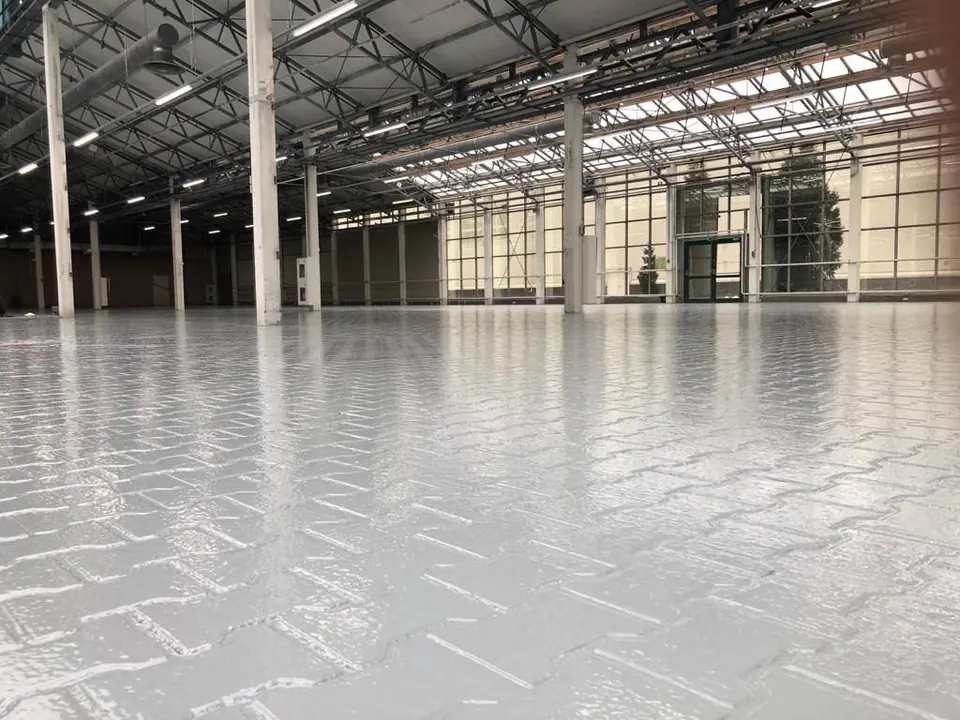 04
Temperature, humidity and the dew pointWhy two-component coatings are sensitive to cold and heat, how to check the dew point and what changes in winter and summer.
4 min readRead the guide
04
Temperature, humidity and the dew pointWhy two-component coatings are sensitive to cold and heat, how to check the dew point and what changes in winter and summer.
4 min readRead the guide 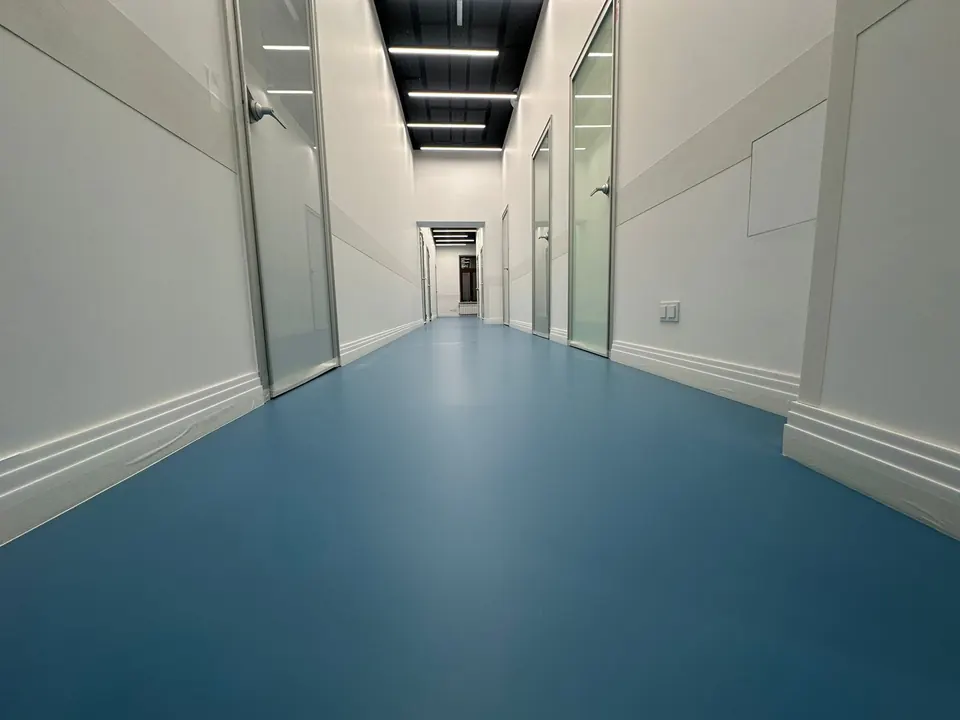 05
Caring for a resin floorDaily and weekly cleaning, what never to use, how often to renew the varnish and how to repair scratches.
3 min readRead the guide
05
Caring for a resin floorDaily and weekly cleaning, what never to use, how often to renew the varnish and how to repair scratches.
3 min readRead the guide 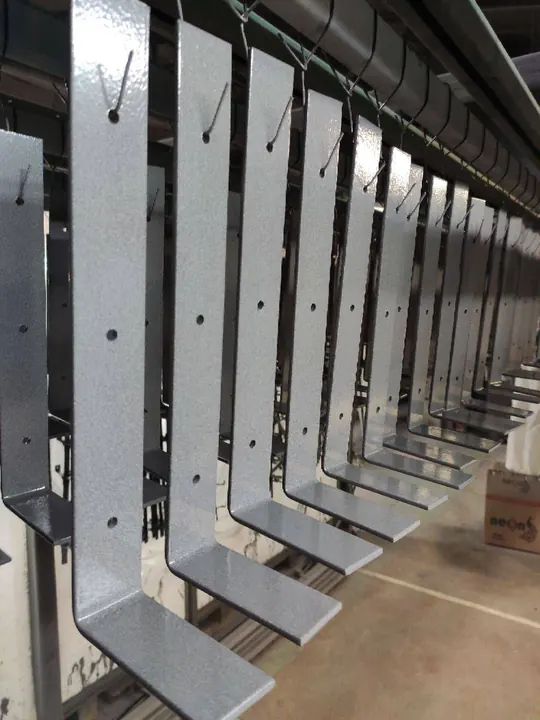 06
Protecting steel structures from corrosionCorrosivity categories, surface preparation, a three-coat Teping® system and the conditions for application.
3 min readRead the guide
06
Protecting steel structures from corrosionCorrosivity categories, surface preparation, a three-coat Teping® system and the conditions for application.
3 min readRead the guide 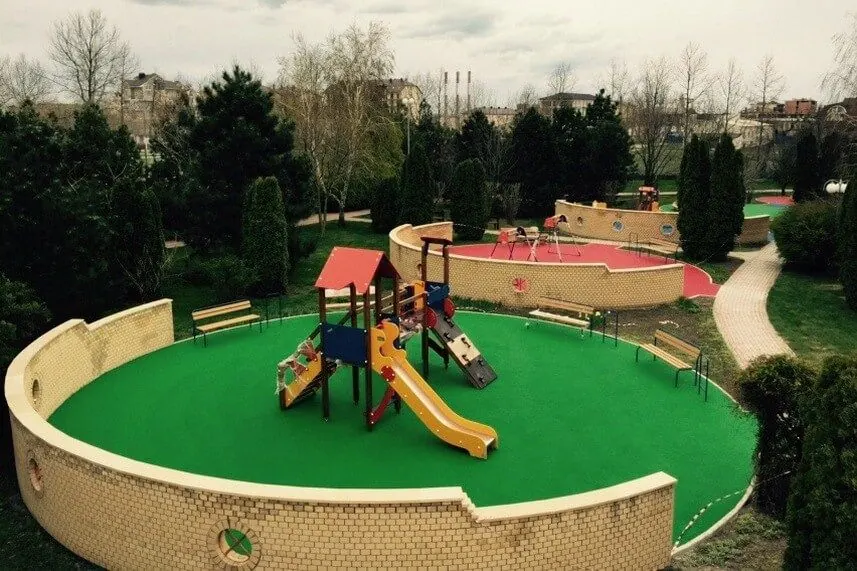 07
Rubber crumb and EPDM surfaces for playgrounds and sports groundsTeping Sport Classic, EPDM and Combi compared, the bases they need, consumption per square metre and how they are laid.
4 min readRead the guide
07
Rubber crumb and EPDM surfaces for playgrounds and sports groundsTeping Sport Classic, EPDM and Combi compared, the bases they need, consumption per square metre and how they are laid.
4 min readRead the guide 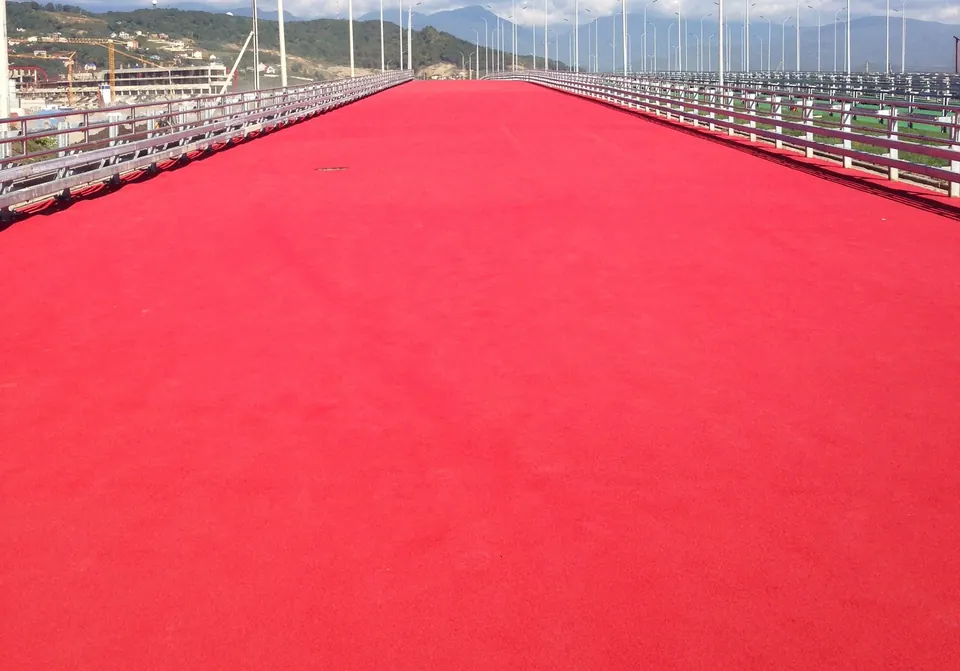 08
Surface thickness for a fall heightHow EN 1176-1 and EN 1177 link the fall height of play equipment to the thickness of a rubber surface, how large the impact area must be and what to send us for a calculation.
3 min readRead the guide 09
EPDM or SBR: which granules to chooseHow black SBR rubber granules differ from coloured EPDM granules, how much of each a square metre needs and which Teping coating to choose for a playground or a sports hall.
2 min readRead the guide
08
Surface thickness for a fall heightHow EN 1176-1 and EN 1177 link the fall height of play equipment to the thickness of a rubber surface, how large the impact area must be and what to send us for a calculation.
3 min readRead the guide 09
EPDM or SBR: which granules to chooseHow black SBR rubber granules differ from coloured EPDM granules, how much of each a square metre needs and which Teping coating to choose for a playground or a sports hall.
2 min readRead the guide 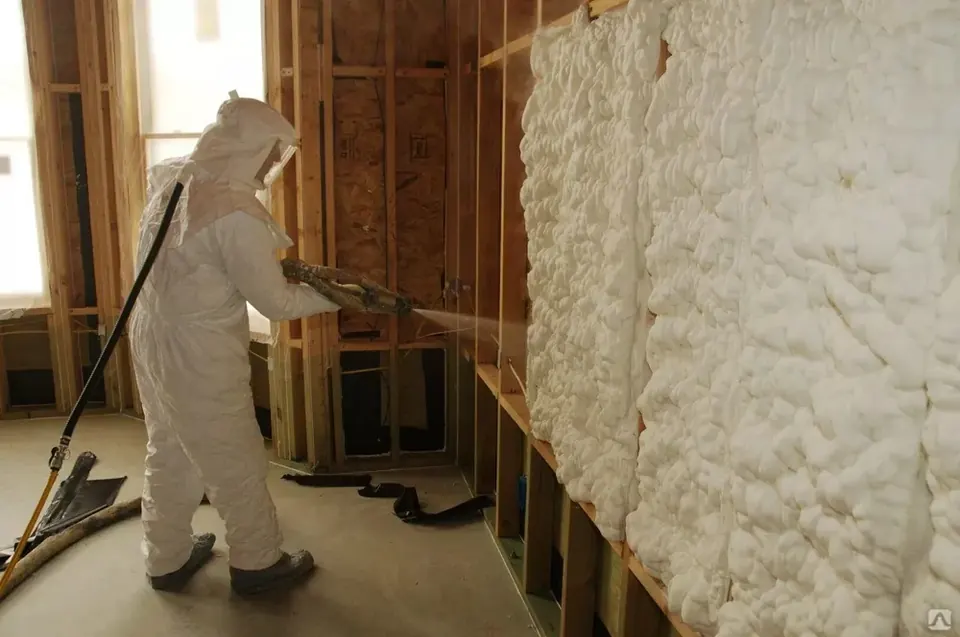 10
Spray polyurethane foam: open or closed cellHow Teping Spray 20-60 W and Spray 10 differ, what substrates and temperatures they need, and how to spray in layers.
3 min readRead the guide
10
Spray polyurethane foam: open or closed cellHow Teping Spray 20-60 W and Spray 10 differ, what substrates and temperatures they need, and how to spray in layers.
3 min readRead the guide FAQ
Answers to common questions
Short answers from the TNP technical team. Where a topic needs more detail, the answer links to a guide.
Substrate and preparation
What are the requirements for the substrate?
Concrete or screed of at least B15 (M200) with compressive strength from 20 MPa, at least 28 days old, pull-off strength from 1.5 MPa and moisture up to 4 % by mass. It must be flat, dry and free of dust, oil, cement laitance and old coatings, with cracks and cavities repaired. Details in preparing a concrete substrate.
Can a self-levelling floor be laid on old concrete?
Yes, if the concrete is sound. Clean it, grind it, repair all cracks and unevenness and prime it; otherwise the coating will not bond.
How do I apply a Teping® coating over a power-floated topping?
Shot-blast the topping first. It is a non-absorbent surface, and without blasting no coating bonds to it reliably.
Can a resin floor be laid over ceramic tiles?
Yes. Grind the tiles with diamond cups, tap them with a mallet and remove hollow ones, vacuum, prime with Teping R 1155 Primer 40 and fill the gaps flush with Floor 205 Filler or Primer 100 with quartz sand. The floor can be poured the next day.
Can a floor be poured on steel chequer plate, for example in a goods lift?
Yes. Degrease the steel, prime it with Teping R 1155, which gives the highest adhesion to metal, broadcast sand and then pour the floor.
How is a floor laid where a slope to a drain is planned?
Self-levelling floors flow down a slope. Form the slope from a semi-dry mix of resin and quartz sand laid between screed rails, grind it after curing and seal it with thin coats applied with a flat trowel.
Self-levelling floors
What is the difference between epoxy and polyurethane floors?
Epoxy floors are harder and more resistant to chemicals and wear, but less elastic and can crack under sharp temperature swings. Polyurethane floors are more flexible, withstand impact, vibration and frost, and suit substrates prone to cracking. See choosing a floor coating.
Which floor suits a garage or a car park?
Epoxy floors with quartz filler are the most wear-resistant choice, for example the anti-slip epoxy floor. Polyurethane floors suit garages with a moving substrate and frost, and polyurethane-cement floors suit car parks with de-icing salts and washing.
How long does it take to lay a self-levelling floor?
On average 2 to 5 days, including substrate preparation, the coats and curing. Add the waiting time before full service.
When can the floor be walked on and used?
At +20 °C you can walk on it after 24 hours, use it fully after 7 days, and it reaches full strength after 28 days. In the cold each step takes longer.
How thick should a self-levelling floor be?
1.5–2 mm for foot traffic, 2–3 mm for industrial vehicle traffic, 3–5 mm for very heavy loads. Teping Floor 205 C is not laid thinner than 1.5 mm: a thinner coat loses its decorative look and wear resistance.
Can a self-levelling floor be anti-slip?
Yes. Quartz sand is broadcast into the coat or added to the mix, giving a rough surface. See the anti-slip epoxy, polyurethane and paint systems.
Are there decorative self-levelling floors?
Yes: floors with coloured flakes under a varnish, 3D floors and coloured quartz floors. For a "beach" effect, an image printed on self-adhesive vinyl or real stones laid on the floor are cast in clear Teping Floor 205 Clear 3D.
Can a resin floor be used in a flat or a house?
Yes, they suit kitchens, bathrooms and hallways. Teping Floor 205 C and Floor 205 Clear 3D are safe in service and emit no harmful substances. Floor 205 C can also be laid over underfloor heating.
How long does a resin floor last?
With correct installation and care, epoxy and polyurethane floors last 10 to 20 years, depending on the type of coating and the conditions of use.
How do I get rid of air bubbles?
Go over the fresh coat with a spiked roller: 7–10 minutes after pouring for epoxy, 5–7 minutes for polyurethane. Bubbles are more likely on a cold substrate and with cold components.
Can I lay a self-levelling floor myself?
In theory yes, but for a good result with two-component systems professionals are recommended. In any case make a test area of at least 2 m² and follow the product instruction.
Can the colour be changed or a new coat laid over an old floor?
Yes. Grind the old surface, prime it to ensure adhesion, then apply the new decorative or protective coat.
Primers and paints
Does a primer protect concrete from moisture?
An epoxy primer does: it forms a layer that water does not pass through. A polyurethane primer protects only partly.
Can a primer be used as the only coat?
Only temporarily: a primer is not resistant enough to abrasion.
How much primer does concrete need?
0.2–0.4 kg/m² per coat, depending on how absorbent the concrete is: dense concrete takes less, porous concrete more.
Can the finish go on a primer that is not yet dry?
No. Wait until the primer has fully dried, otherwise the adhesion will be poor.
Why broadcast fine sand on the primer?
Sand improves adhesion and strength of the coating, and on slopes it stops the next coat from running.
Epoxy or polyurethane primer?
An epoxy primer has high adhesion and chemical resistance and penetrates deep into concrete, which makes it the usual choice for a garage floor. A polyurethane primer is more elastic and resists UV light, so it suits outdoor work, where epoxy is not recommended. An epoxy primer can be overcoated with a polyurethane paint.
Which enamel is best outdoors?
The two-component polyurethane Teping Floor 205 PU Enamel 60. It is lightfast, does not fade in the sun and does not crack with temperature swings. It smells during application, but not once it is dry.
Can coatings be applied in the cold?
Self-levelling floors and epoxy paints need air above +10 °C and a substrate 3 °C above the dew point. Below +5 °C use single-component moisture-curing polyurethanes such as Teping PU Primer 1K and Teping PU Enamel 1K.
Sports and playground surfaces
Sport Classic, Sport EPDM or Sport Combi?
Sport Classic of black rubber crumb is the reliable budget option. Sport EPDM gives bright colours and withstands freeze-thaw cycles. Sport Combi combines a black crumb shock pad with a coloured EPDM top: bright and cost-effective.
Can a rubber surface be laid on asphalt or on the ground?
Yes. Asphalt and concrete are cleaned and primed with the binder. A ground base needs a compacted build-up of sand, crushed stone and screenings, good drainage and geotextile under the surface.
When can the playground be opened?
Foot traffic is possible after 24 hours, the surface is fully dry after 72 hours. Vehicles need 3–5 days.
How much binder does rubber crumb need?
Teping AD RC takes 15–25 % of the crumb mass, depending on the crumb size. For 10 mm of rubber crumb surface that is about 7 kg of crumb and 1.6 kg of binder per square metre.
Polyurethane systems
What is the difference between open-cell and closed-cell foam?
Closed-cell rigid foam has the lower thermal conductivity: up to 0.035 W/(m·K) for Teping Spray 20-60 W. Open-cell foam lets more water vapour through: Teping Spray 10, up to 0.045 W/(m·K).
How thick can spray foam be applied in one pass?
No more than 25 mm per pass, after a first thin coat of 3–5 mm; usually 3–4 passes. Each pass goes on only when the previous one has risen and cooled to 40 °C.
Can spray foam be applied in winter?
Yes, at ambient temperatures from −5 °C, with components heated to 45–50 °C. The surface must be dry and free of condensation, and spraying stops in rain.
Water-based paints
Do walls need priming before painting?
Yes. A clean, dry substrate is treated with Teping Decor Primer: it binds dust and evens out absorbency so the colour comes out uniform. Without a primer, the first coat of paint may be thinned with water by up to 15 %.
How soon can new concrete or plaster be painted?
Concrete after 28 days at the earliest, cement and cement-lime plasters and fillers after 14 days, cement decorative plasters after 7 days.
How many coats of paint are needed?
Two coats by brush, roller or spray at +5 … +30 °C and humidity up to 80 %, the second after 6 hours at the earliest. To avoid shade differences, work wet on wet and paint one surface with paint from one batch.
How does an antistatic paint work?
The film of Teping Decor AS dissipates static charge, but carries it away only when earthed: a copper tape or anchors connected to the building’s earthing bar run along the perimeter of the painted surface.
Dry floor mixes
What substrate do Teping Cem mixes need?
A sound, dry substrate (moisture up to 5 %) free of dust, oil and laitance: concrete at least 1–3 months old, sand-cement screed at least 28 days, compressive strength from 15 to 25 MPa depending on the mix. An absorbent substrate is primed in two coats 2–3 hours apart.
Can a resin floor go on top of a self-levelling screed?
Yes: Teping Cem Universal and Teping Cem M serve as a base for resin coatings. Before an impermeable coating, Cem Universal needs 24 hours at up to 15 mm and 48 hours at up to 30 mm; always check the moisture first.
Do the floors need cut joints?
Yes. Movement and shrinkage joints of the substrate are repeated in the floor; without them, the floor is cut into bays of up to 6 × 6 m (about 6 × 3 m for Cem M) 24–48 hours after laying and filled with polyurethane sealant after 7–10 days.
Which floor suits explosion-hazard production?
A spark-free one: the cement Teping Cem 40 20–100 mm thick or the magnesia Teping Cem M 5–25 mm thick. Cem M is also antistatic: it is laid over the conductive Teping NG Primer AS connected to the earthing circuit.
Not sure which coating fits?
Describe the object, the loads and the conditions. The TNP technical team will suggest a system and send the documents.