01What the substrate must be
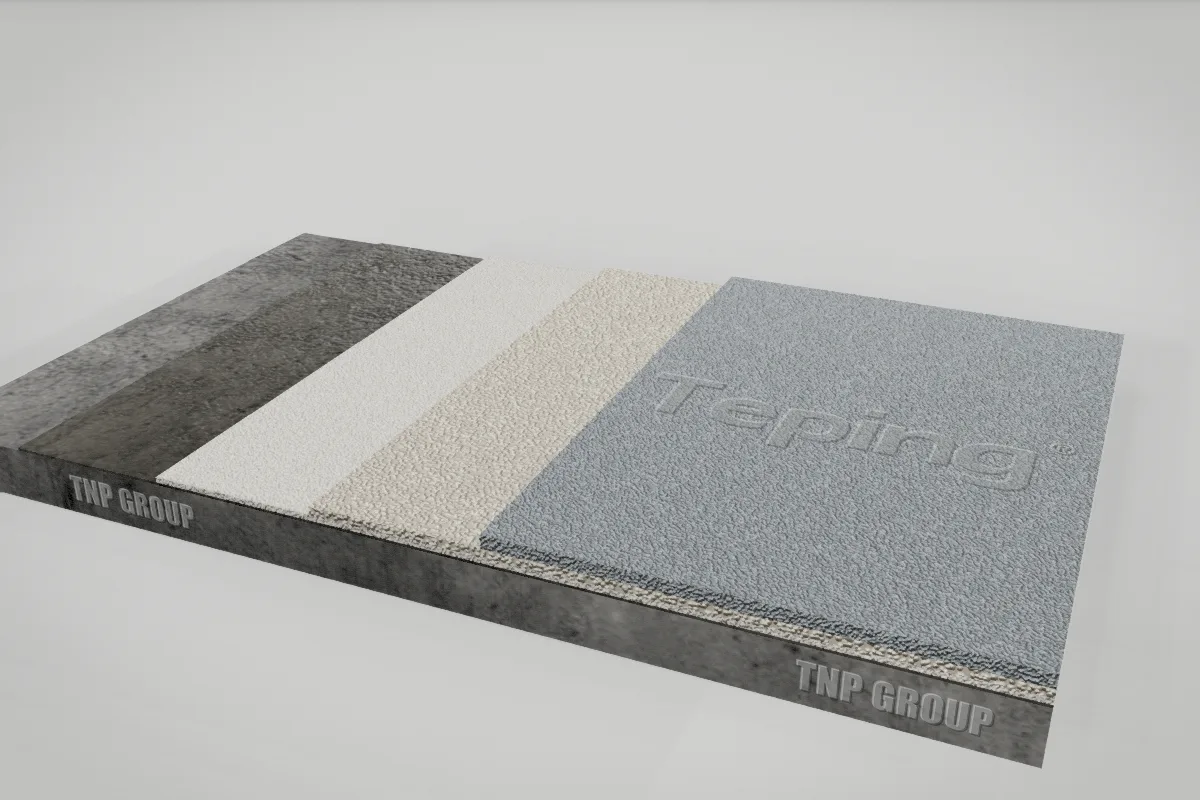
Teping® floor systems are laid on dense mineral substrates in line with SP 29.13330.2011 «Floors»: concrete or cement-sand screed.
- Concrete class B15 (grade M200) or higher, compressive strength at least 20 MPa.
- Age at least 28 days.
- Pull-off strength of the surface layer at least 1.5 MPa.
- Residual moisture no more than 4 % by mass.
- Flatness: gaps no more than 2 mm under a 2 m straightedge; slope no more than 2 % (3 % for paints).
- Waterproofing below the slab: where moisture can rise from the ground, coating without it is not allowed.
- Levelling compounds only cement-based, with compressive strength of at least 25 MPa. Gypsum-based ones are not suitable.
02Measure before you start
Check the moisture and the strength of the substrate first. Only if they meet the requirements is it worth grinding and priming. A thermo-hygrometer and a pyrometer are needed for the conditions on the day: see temperature, humidity and the dew point.
03Remove the weak top layer
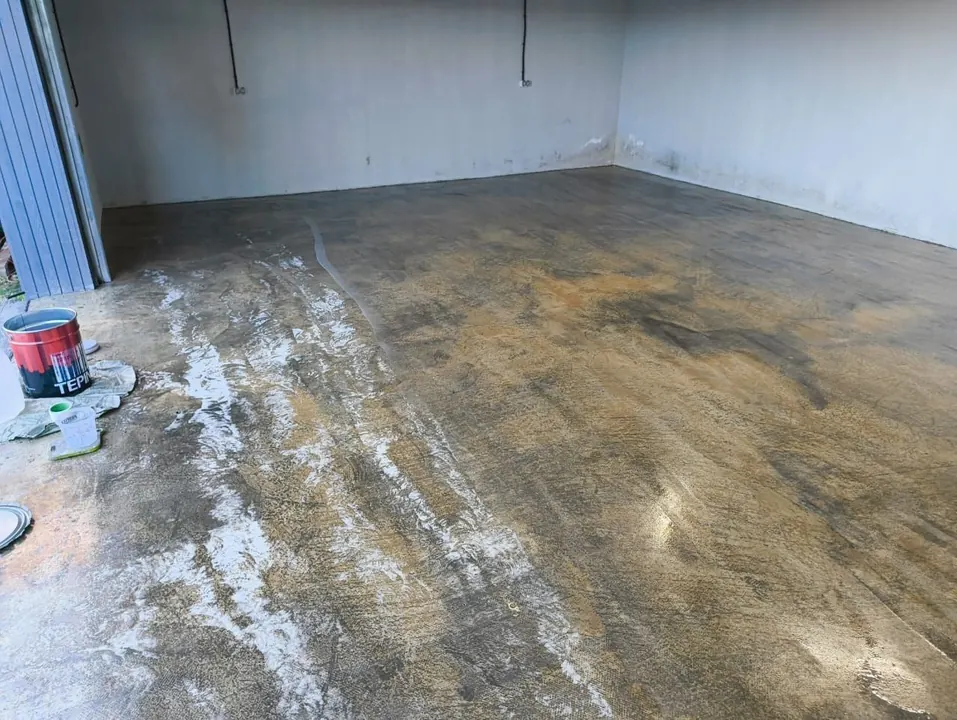
- Shot-blast, scarify or diamond-grind the surface to remove cement laitance, old coatings, topping, loose particles, bumps and sharp edges.
- Remove oil and grease stains by any suitable method, cutting out the contaminated concrete if needed.
- Vacuum the whole surface with an industrial vacuum cleaner.
04Repair cracks and potholes
- Open up and clean cracks and joints. Tap out potholes and chips, clean and vacuum them.
- Prime the repair areas with Teping R 1155 Primer 100.
- Fill them with Primer 100 mixed with 0.1–0.3 mm quartz sand at 1:4 to 1:5 by mass, or with Teping Floor 205 Filler and quartz at 1:1 to 1:3.
- After 12–24 hours, depending on the temperature, grind off the excess and vacuum the whole floor again.
05Prime until the pores are sealed
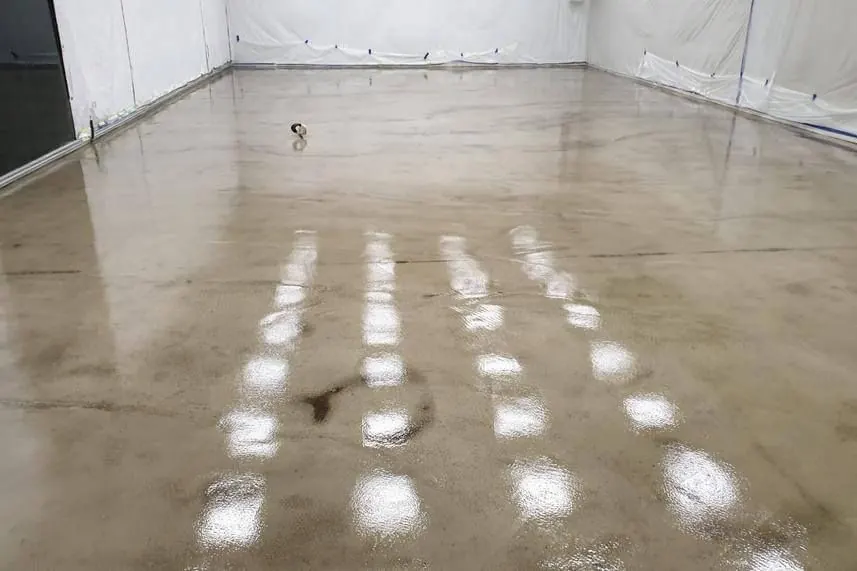
Apply the primer with a roller and use a brush in corners. On very porous concrete, scrape on a mix of Primer 100 and quartz sand at 1:1 by mass. Where matt, dry-looking patches remain, prime again: the surface must be evenly sealed.
The finish goes on only after the primer has fully dried, otherwise adhesion will be poor. If the next coat follows more than 72 hours later, broadcast 0.1–0.2 kg/m² of sand into the fresh primer. Sand on the primer improves adhesion and stops the next coat from sliding on slopes.
06Special substrates
- Power-floated topping does not absorb, and no coating bonds to it reliably as it is. Shot-blast it before priming.
- Cement-bonded particle board: remove the dust, prime with Teping R 1155 Primer and broadcast fine sand.
- Ceramic tiles: grind the whole surface with diamond cups, tap the tiles with a mallet and remove hollow ones, vacuum, prime with Teping R 1155 Primer 40, fill the gaps flush with Floor 205 Filler or Primer 100 with quartz. The floor can be poured the next day.
- Steel, for example chequer plate in a goods lift: degrease, prime with R 1155 paint, which gives the highest adhesion to metal, broadcast sand, then pour. Blast-cleaned steel is primed within 24 hours.
- An old resin floor: grind it and prime it before the new coat.
07Slopes and drains
Self-levelling floors flow, so on a planned slope they run and leave sags. Build the slope from a semi-dry, non-flowing mix of resin and quartz sand laid between screed rails. After it cures, grind it and seal it with thin finishing coats applied with a flat trowel.
Sources. Based on the instructions and technical data sheets for Teping® products published at tnpgroup.ru and the TNP technical solutions album 2025. Always follow the instruction for the specific product and batch.