01Closed or open cell
| Teping Spray 20-60 W | Teping Spray 10 | |
|---|---|---|
| Cell structure | closed, rigid foam | open |
| Thermal conductivity | ≤ 0.035 W/(m·K) | ≤ 0.045 W/(m·K) |
| Ratio A:B by volume | 100:100 | 100:105 |
| Cream / rise time | 2–10 s / 8–20 s | 2–6 s / 7–15 s |
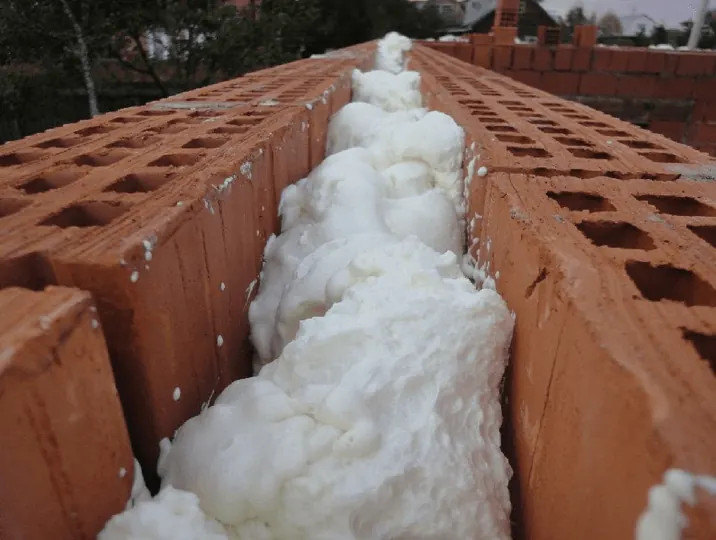
Closed-cell Teping Spray 20-60 W gives the lower thermal conductivity. Open-cell Teping Spray 10 lets more water vapour through. Choose by the build-up of the wall or roof, and ask us if in doubt. For filling cavities there are pour-in-place systems with the same two structures: Teping FL 20-60 F/W and Teping FL 10.
02Substrate
- Concrete, brick, metal and wood.
- Moisture no more than 4 % for mineral substrates and 12 % for wood; no condensation on the surface.
- Clean, dust-free and free of oil. Remove flaking coatings and loose rust, then degrease.
- Prime metal with a thin coat of Teping PU Primer where needed; blasting and degreasing improve adhesion.
03Temperature and equipment
- Ambient temperature from −5 to +40 °C. Do not spray above +40 °C ambient or onto a surface hotter than +60 °C.
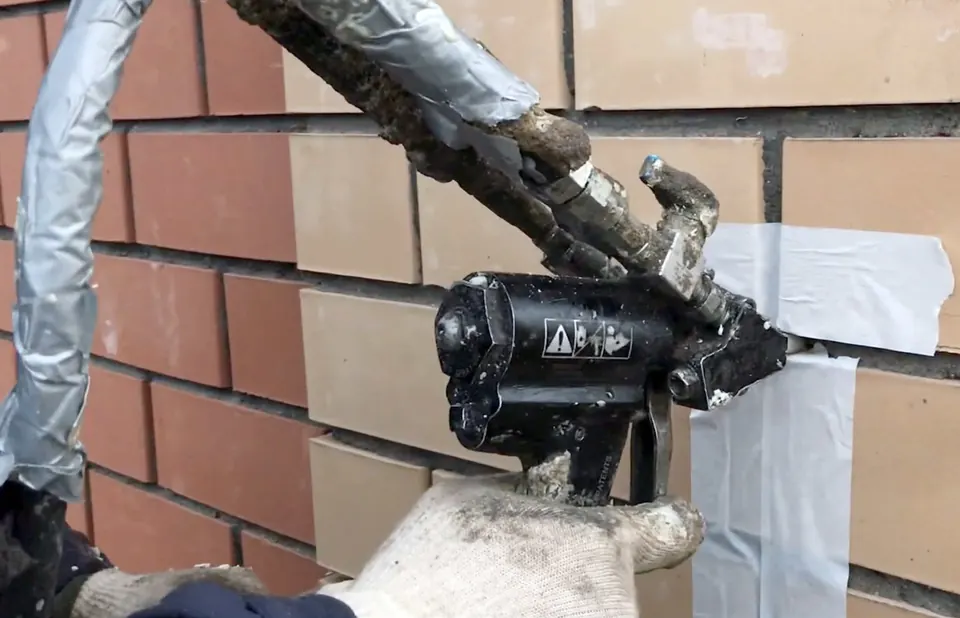
- High-pressure machines: heat components A and B to 45–50 °C in the flow heaters, hoses to 35–45 °C.
- Low-pressure machines: warm the drums to 45–50 °C; use insulated hoses no longer than 10 m.
04Spraying in layers
- Spray a test area of 2 m² and check the cream and rise times.
- Begin with hard-to-reach places: gables, chimneys, vents.
- Apply a first thin coat of 3–5 mm.
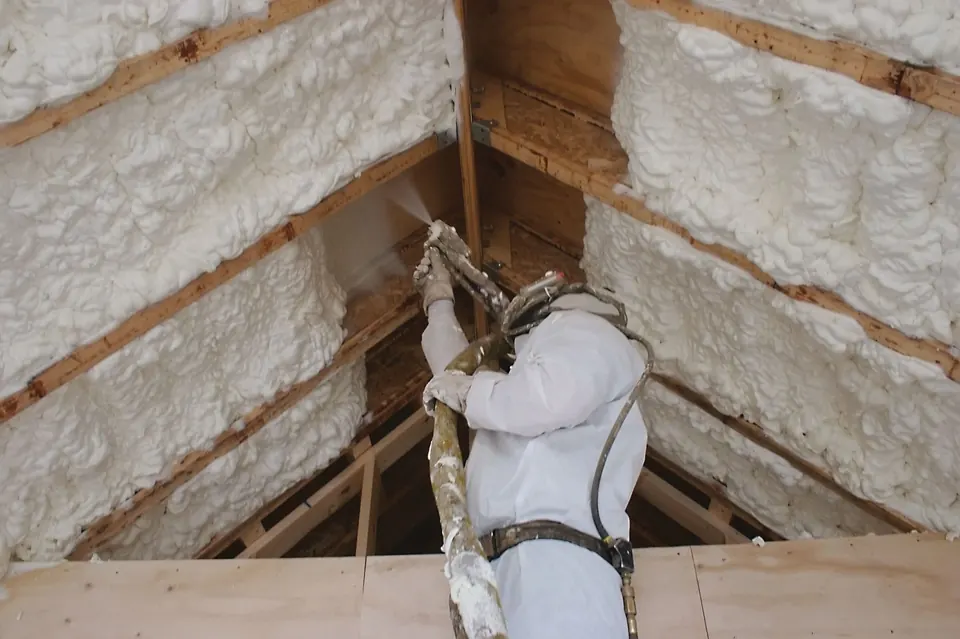
- Build up the thickness in 3–4 passes, no more than 25 mm each. Hold the gun 0.6–1.0 m from the surface, at a right angle, moving evenly without pauses.
- Spray the next pass only when the previous one has fully risen and has cooled to 40 °C or below (check with a pyrometer).
- Stop in rain and continue only when the previous layer and the substrate are dry.
05Safety and storage
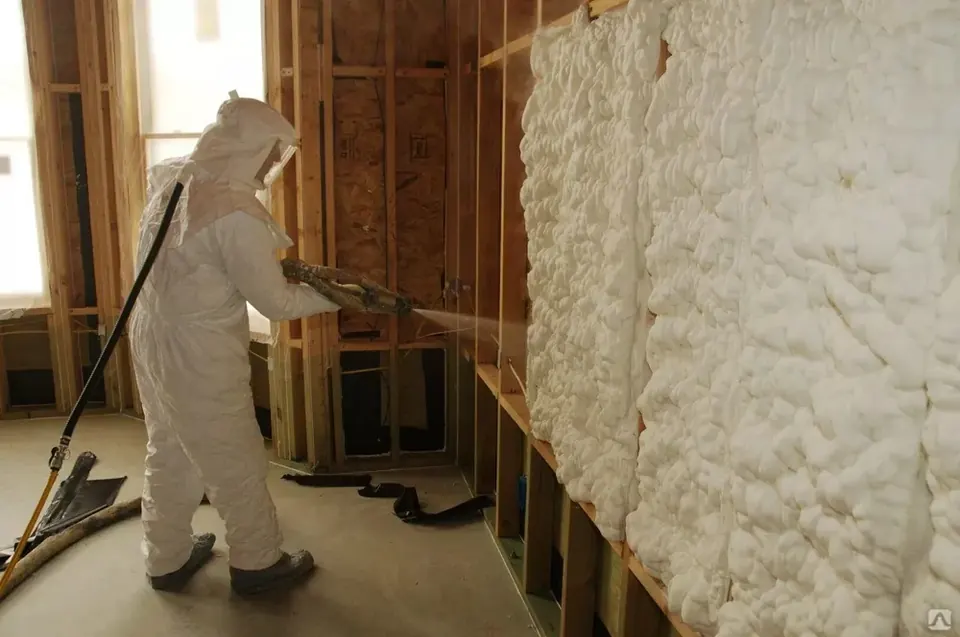
- Wear a gas mask with a type B or BKF filter, goggles with side shields, synthetic rubber gloves and protective clothing and shoes.
- No open flame, welding or smoking near the work.
- Store and transport at +5 to +30 °C in a dry heated room; shelf life 6 months in sealed original packaging. Do not keep opened containers for later use.
Sources. Based on the instructions and technical data sheets for Teping® products published at tnpgroup.ru and the TNP technical solutions album 2025. Always follow the instruction for the specific product and batch.